
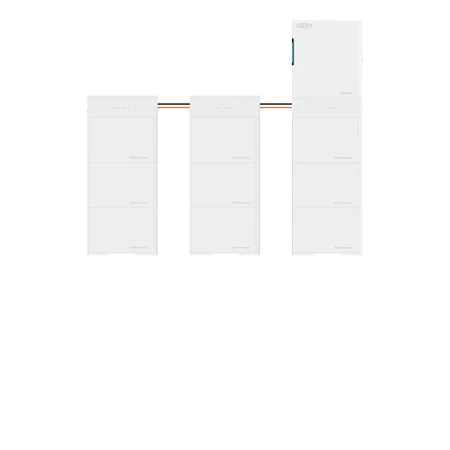
A 21.08–94.86kWh battery range allows three-phase homes to match storage with electricity demand, solar generation, and backup needs. Smaller systems around 21kWh support daily solar shifting, while 90kWh-class storage can provide extended backup for large homes, EV charging, and high-consumption appliances. Proper sizing depends on annual energy use, PV capacity, inverter rating, and future electrification plans.
Three-phase homes usually require larger storage systems than standard residential properties because they often include higher-power appliances, electric vehicles, heat pumps, and larger photovoltaic arrays. A storage range from 21.08kWh to 94.86kWh covers different residential energy patterns, from basic evening energy use to extended backup operation. In many European, North American, and Australian homes, annual electricity consumption ranges from 8,000kWh to more than 30,000kWh depending on house size and equipment.
A battery should be sized according to the amount of electricity a home can use and generate, not only by available battery capacity.
A 21.08kWh battery typically provides around 19kWh of usable energy when operating at a 90% depth of discharge. For a household using 5–8kWh overnight, this capacity can cover several hours of lighting, refrigeration, internet equipment, security systems, and basic appliances. When paired with a 10–15kW solar system, it can store daytime solar production and reduce electricity purchased during evening periods.
The storage requirement increases as household electricity consumption grows. Homes with electric vehicles often add 10–30kWh of electricity demand per day, while heat pumps can increase annual electricity use by 30%–100% depending on climate conditions and heating requirements. A household using 50kWh per day may need 40–60kWh battery capacity to maintain high solar self-consumption.
| Battery size | Usable energy at 90% depth of discharge | Common residential use |
|---|---|---|
| 21.08kWh | About 19kWh | Solar self-use and basic backup |
| 40kWh | About 36kWh | Medium homes with EV charging |
| 60kWh | About 54kWh | Larger homes with higher electricity demand |
| 94.86kWh | About 85kWh | Large properties requiring longer backup |
Battery capacity also needs to match solar generation. A three-phase home with a 20kW PV system may produce 80–120kWh of electricity on a clear summer day. Without enough storage, part of this energy may be exported to the grid instead of being used later. A battery between 40kWh and 70kWh can capture a larger portion of daytime solar production while still maintaining regular charging cycles.
In residential storage design, the most common approach is balancing solar surplus, household consumption, and backup duration.
Inverter power is another factor when selecting storage. Three-phase systems distribute electricity across three circuits, allowing higher power output compared with many single-phase installations. A 15kW to 30kW three-phase hybrid inverter is often paired with medium or large battery banks for homes with multiple high-power devices.
For example, a 60kWh battery connected to a 20kW three-phase inverter can provide both energy capacity and sufficient output power for appliances such as air conditioning systems, water heaters, workshops, and EV chargers. A battery with high capacity but insufficient inverter output may not supply enough power during periods of high electricity use.
Battery chemistry affects usable capacity and operating life. Lithium iron phosphate (LFP) batteries are widely used in residential energy storage because they offer stable performance, high safety levels, and long cycle life. Many current LFP systems are rated for 6,000–10,000 cycles, which can support more than 15 years of daily operation when temperature and charging conditions are properly managed.
The HM15 by ESYsunhome is designed for residential energy storage applications where modular capacity expansion and three-phase compatibility are required. The system approach allows homeowners to adjust storage size according to electricity demand, with configurations suitable for different household energy patterns. More information about this residential ESS solution can be found at HM15 by ESYsunhome.
Storage expansion is becoming more common because household electricity needs often increase over time. A home that uses 12,000kWh annually today may exceed 20,000kWh after adding electric vehicles, battery-powered equipment, or electric heating systems. Installing an expandable battery system allows capacity growth without replacing the complete energy storage setup.
A modular battery design helps households increase storage from medium capacity levels toward larger systems when electricity demand changes.
For homes requiring longer backup periods, 80–95kWh storage provides a different operating range. A 94.86kWh battery with approximately 85kWh usable energy can support essential household loads for multiple days when consumption is controlled. At a 5kW average load, the stored energy could theoretically provide about 17 hours of operation, while lower emergency loads may continue much longer.
The economic performance of storage depends on electricity prices, solar production, and usage patterns. In regions with high evening electricity rates, batteries can reduce grid consumption by storing low-cost solar energy during the day. Residential storage systems installed after 2020 have increasingly focused on maximizing solar usage rather than only providing backup power.
A well-sized three-phase home battery should consider several factors:
| Parameter | Typical range |
|---|---|
| Annual household electricity use | 8,000–30,000kWh |
| Solar PV size | 10–40kW |
| Battery capacity | 21.08–94.86kWh |
| Usable depth of discharge | 85%–95% |
| Round-trip efficiency | 85%–95% |
| Operating life | 10–15+ years |
Future residential energy systems will continue moving toward higher electricity use as transportation and heating become more electrified. Between 2020 and 2025, many markets reported increasing adoption of residential batteries together with rooftop solar installations. Storage systems in the 21.08–94.86kWh range provide homeowners with flexible options for improving solar utilization, supporting backup requirements, and preparing for higher electricity consumption in the coming years.